The HexClad

HexClad sells one pan that promises to sear like steel and release like nonstick. Independent testers disagree about the second half, and the coating underneath has changed.
Tap either one to check today’s price.
The HexClad
The GreenPan

GreenPan has the edge on 2 of 10 lines, HexClad on 1, 2 even.
| Feature | HexClad | GreenPan |
|---|---|---|
| Price, 12 in on Amazon | About $199, with glass lid | About $100, pan only (the edge) |
| Cooking surface | Laser-etched stainless hexagons over TerraBond ceramic nonstick | Diamond-infused ceramic nonstick, full coverage |
| PTFE and PFAS | Maker says TerraBond is PTFE-free and free of forever chemicals; HexClad's 2023 FAQ said its earlier coating contained PTFE | Maker says free of PFAS, PFOA, lead and cadmium |
| Body | Tri-ply, aluminum core | Hard-anodized aluminum, induction base |
| Oven | Pan to 900°F per the listing; glass lid lower (the edge) | To 600°F; lid to 425°F |
| Metal utensilsEven | Safe per the listing | Safe per the listing |
| DishwasherEven | Dishwasher-friendly per the listing | Dishwasher safe per the listing |
| America's Test Kitchen | Not recommended among nonstick skillets; eggs stuck | Winner among ceramic nonstick skillets (12 in) (the edge) |
| Consumer Reports | Very good egg release, excellent evenness and coating durability | Not part of this comparison |
| Warranty | Lifetime against manufacturer's defects, when sold by HexClad | Not stated on the listing |
The verdict
For most cooks, no: a GreenPan Valencia Pro releases eggs better in independent testing for about half the price, and a clad stainless pan sears better and never wears out. HexClad is worth it only if you want one pan that takes metal tools, the dishwasher and very high oven heat, and accept that it is not as slick as true nonstick.
The cookware you do not have to wonder about.The nonstick pan worth buying, knowing it will wear out.
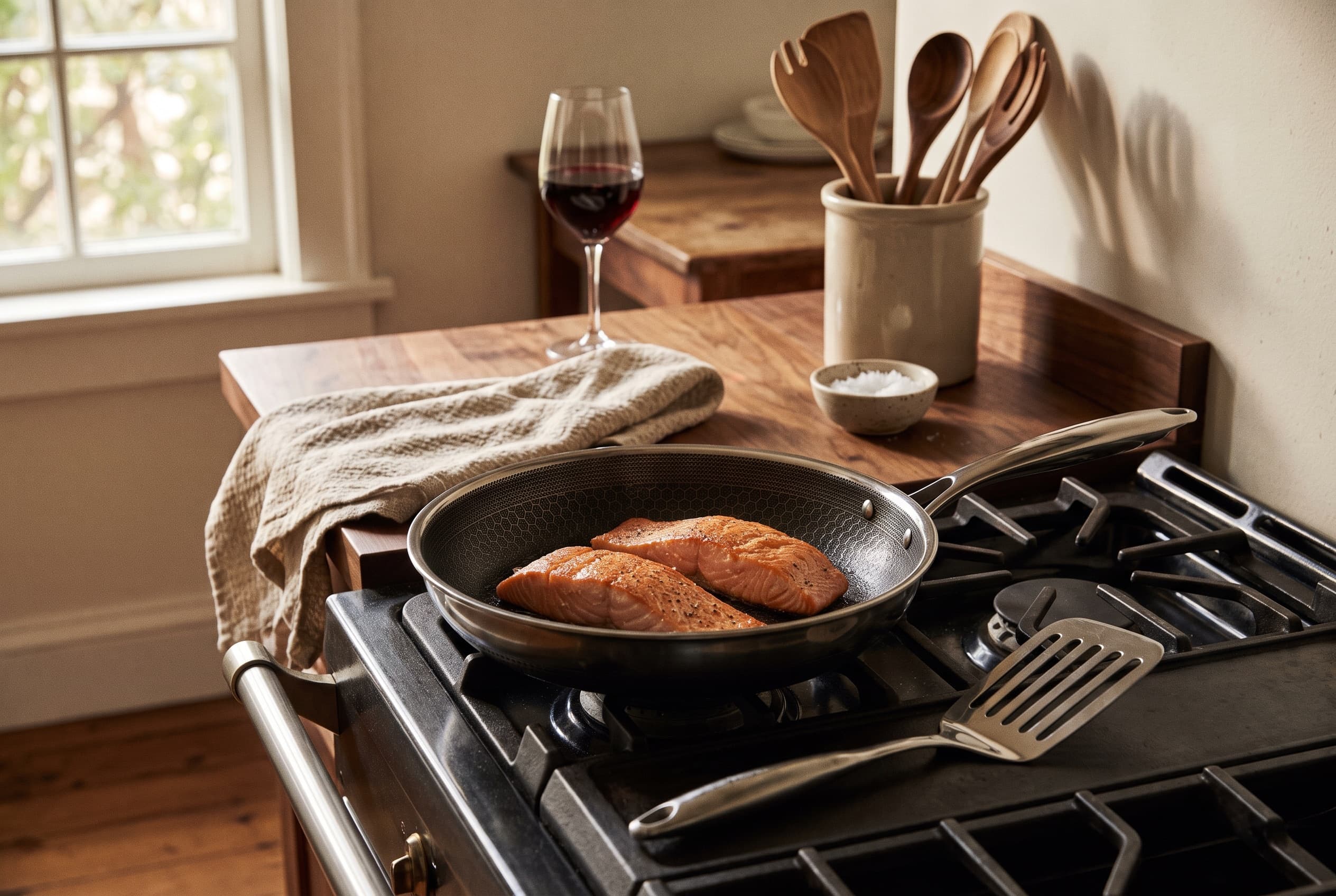
Two questions come up about HexClad, and they have different answers. Is it worth $199? For most kitchens, no; two simpler pans do its two jobs better. Is it toxic? That depends on when the pan was made, because HexClad changed its coating, and it is worth being precise about what changed.
HexClad's surface is a grid of raised stainless steel hexagons with nonstick coating in the valleys between them. HexClad now says that coating is TerraBond, a ceramic nonstick it describes as PTFE-free and free from forever chemicals, and the current Amazon listing sold by HexClad names TerraBond. Earlier pans did not: as late as December 2023, HexClad's own FAQ said its nonstick coating contained PTFE. A California class action alleged HexClad had marketed those pans as "non-toxic," "PFAS free" and "PFOA free" despite the PTFE; HexClad denied wrongdoing and agreed in a $2.5 million settlement to stop using those phrases on products containing PTFE or other PFAS.
So the fair comparison today is ceramic against ceramic. The pan here is GreenPan's Valencia Pro 12 inch, America's Test Kitchen's winner among ceramic nonstick skillets, at about half the price. Clad stainless alternatives follow for cooks who would rather have no coating at all.
A sturdy tri-ply pan that tolerates metal, the dishwasher and high oven heat, but is not as slick as true nonstick.
The listing, sold on Amazon by HexClad, describes a tri-ply pan with an aluminum core and a laser-etched hexagonal surface of stainless steel and TerraBond ceramic coating. It works on induction, is rated metal-utensil safe and dishwasher friendly, and the pan is oven safe to 900 degrees Fahrenheit, with the included glass lid rated lower. The pan is about 12 inches across and 2 inches deep.
The testing is split. America's Test Kitchen rated the 12 inch pan not recommended among nonstick skillets: eggs stuck, which it attributed to the uncoated steel hexagons interrupting the coating, and it noted short walls and weight. Consumer Reports rated a HexClad hybrid very good at releasing eggs, excellent for evenness and excellent at surviving 2,000 strokes of steel wool. Neither review states which coating its sample had, and some testing may predate TerraBond.
Buy it if one pan for almost everything, metal tools and the dishwasher matter more than the best release or the best sear. Skip it if you want either a true egg pan or a pan with no coating; one of each costs less and does both jobs better.
The catch. Not as slick as true nonstick in ATK's testing, and the coating is still the part that ages.
Where to buy
AmazonCheck price →America's Test Kitchen's favorite ceramic skillet: slicker than the HexClad for about half the price.
Valencia Pro is hard-anodized aluminum with an induction base and a diamond-infused ceramic coating that GreenPan says is free of PFAS, PFOA, lead and cadmium. The listing rates it metal-utensil safe, dishwasher safe, and oven and broiler safe to 600 degrees Fahrenheit, with lids to 425.
America's Test Kitchen tested the 12 inch pan and named it the winner among ceramic nonstick skillets. It was one of only three pans to pass ATK's coating durability test, arriving slick and staying slick. ATK notes it runs hotter than traditional nonstick, so recipes may need a lower flame.
The caveat is the category's. ATK found ceramic generally less slick and less durable than PTFE, and it gets less so over time. Keep the heat moderate and wash by hand, and expect to replace it in a few years, as with any coated pan.
The catch. Runs hot, and like all ceramic it loses release over time.
Where to buy
AmazonCheck price →Bare tri-ply stainless that sears better than any hybrid and has nothing to wear out.
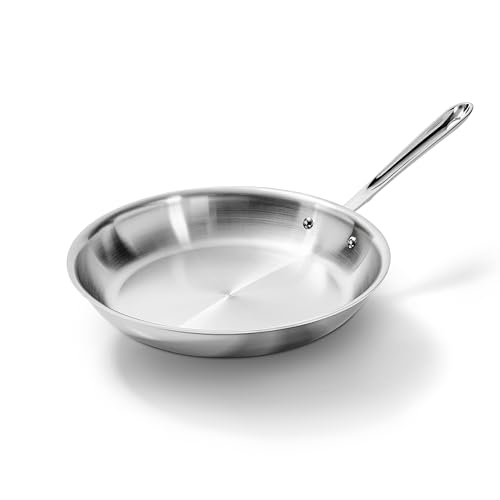
D3 is All-Clad's original bonded tri-ply, stainless inside and out around an aluminum core, made in Pennsylvania with global components. It is oven and broiler safe to 600 degrees Fahrenheit and works on induction. America's Test Kitchen has named it its winner among stainless skillets for years.
Paired with an inexpensive nonstick for eggs, it covers everything the HexClad attempts, for about the same total money. Our All-Clad vs HexClad comparison sets the two side by side.
The catch. Food sticks until you learn to preheat and use fat, and it is hand wash only.
Where to buy
AmazonCheck price →Clad 18/10 stainless with a lifetime warranty for a quarter of the HexClad's price.

Tramontina's tri-ply pan is 18/10 stainless around an aluminum core, made in Brazil, NSF certified, oven safe to 500 degrees Fahrenheit and induction compatible. It is dishwasher safe, which the All-Clad is not. America's Test Kitchen has made it its budget pick among stainless skillets.
With a GreenPan for eggs, it makes a two-pan kit for about $150, less than one HexClad.
The catch. A smallish flat cooking surface for a 12 inch pan.
Where to buy
AmazonCheck price →Current HexClad pans: HexClad says its TerraBond ceramic coating is PTFE-free and free from forever chemicals, the umbrella term for PFAS. That is the maker's claim; we found no independent lab report on TerraBond to cite.
Earlier HexClad pans: HexClad's own FAQ said in late 2023 that its nonstick coating contained PTFE, and in early 2024 that many of its products did. PTFE is itself a PFAS by the usual definition, which is why the class action objected to "PFAS free" claims on them. HexClad denied wrongdoing and, under the settlement, agreed to stop calling products that contain PTFE or other PFAS "non-toxic," "PFAS free" or "PFOA free." On PTFE coatings generally, the FDA says studies show negligible amounts of PFAS migrate from nonstick coatings into food.
If you own a HexClad and want to know which coating it has, the purchase date is the best guide, and HexClad's customer service can confirm.
Raised steel hexagons protect the coating from metal tools and help with searing, but they are uncoated steel, and food can grip them. That is the reason America's Test Kitchen gave for eggs sticking. The same design makes the pan more durable than a plain coated pan against scrubbing, which is what Consumer Reports' steel wool test measured.
Keep the heat at medium or below, use a little fat, and wash by hand even when the box allows the dishwasher. Heat and detergent age every coating, ceramic included.
For most cooks, no. America's Test Kitchen did not recommend it among nonstick skillets because eggs stuck, while its ceramic winner, the GreenPan Valencia Pro, costs about half as much. It suits a cook who wants one pan that takes metal tools, the dishwasher and very high oven heat.
HexClad says current pans use TerraBond, a ceramic coating it describes as PTFE-free and free of forever chemicals. Earlier pans used a coating containing PTFE, by HexClad's own former FAQ; HexClad settled a lawsuit over marketing those as non-toxic and PFAS free, denying wrongdoing. The FDA says studies show negligible PFAS migration from nonstick coatings into food.
Current pans, according to HexClad, do not: it describes TerraBond as PTFE-free and free from forever chemicals. Older HexClad pans had a coating containing PTFE, as HexClad's FAQ stated in 2023, and PTFE is a PFAS.
It releases food more easily than bare steel and goes in the dishwasher. A clad stainless pan sears better, has no coating to wear and lasts generations.
The listing rates the pan oven safe to 900 degrees Fahrenheit, with the glass lid rated lower.
 KitchenHexClad vs Henckels Paradigm: Which Hybrid Pan to Buy
 KitchenLe Creuset vs Caraway Dutch Oven: Which to Buy
 KitchenBest Revolving Cake Stand for Decorating
 KitchenBest Cast Iron Skillet for a Glass Top Stove
 KitchenBest Chef's Knife Under $100: Five Worth Buying
 KitchenBest Cutting Board for Raw Meat and Poultry
 KitchenBest Cutting Board: End Grain vs Edge Grain Wood
 KitchenThe Best Meat Thermometers: Instant-Read and Leave-In
The Bonwits Letter
What is worth buying for the house this week, what is actually on sale, and what to skip. Short, and never sponsored.

